
Overview
Discovery detects schema changes and categorizes them as breaking or non-breaking, helping you respond appropriately.Schema Change Detection
Discovery detects two types of schema changes:Non-Breaking Changes
Changes that don’t affect existing collection:- New fields added - Automatically included in future collections
- Field metadata updates - Descriptions, annotations, etc.
- New indexes or constraints - Improve query performance
Non-breaking changes are applied automatically. No action required.
Breaking Changes
Changes that may disrupt collection or downstream analytics:- Fields removed - Data previously collected is no longer available
- Field data type changed - May cause collection or transformation errors
- Primary key changed - Affects uniqueness and deduplication
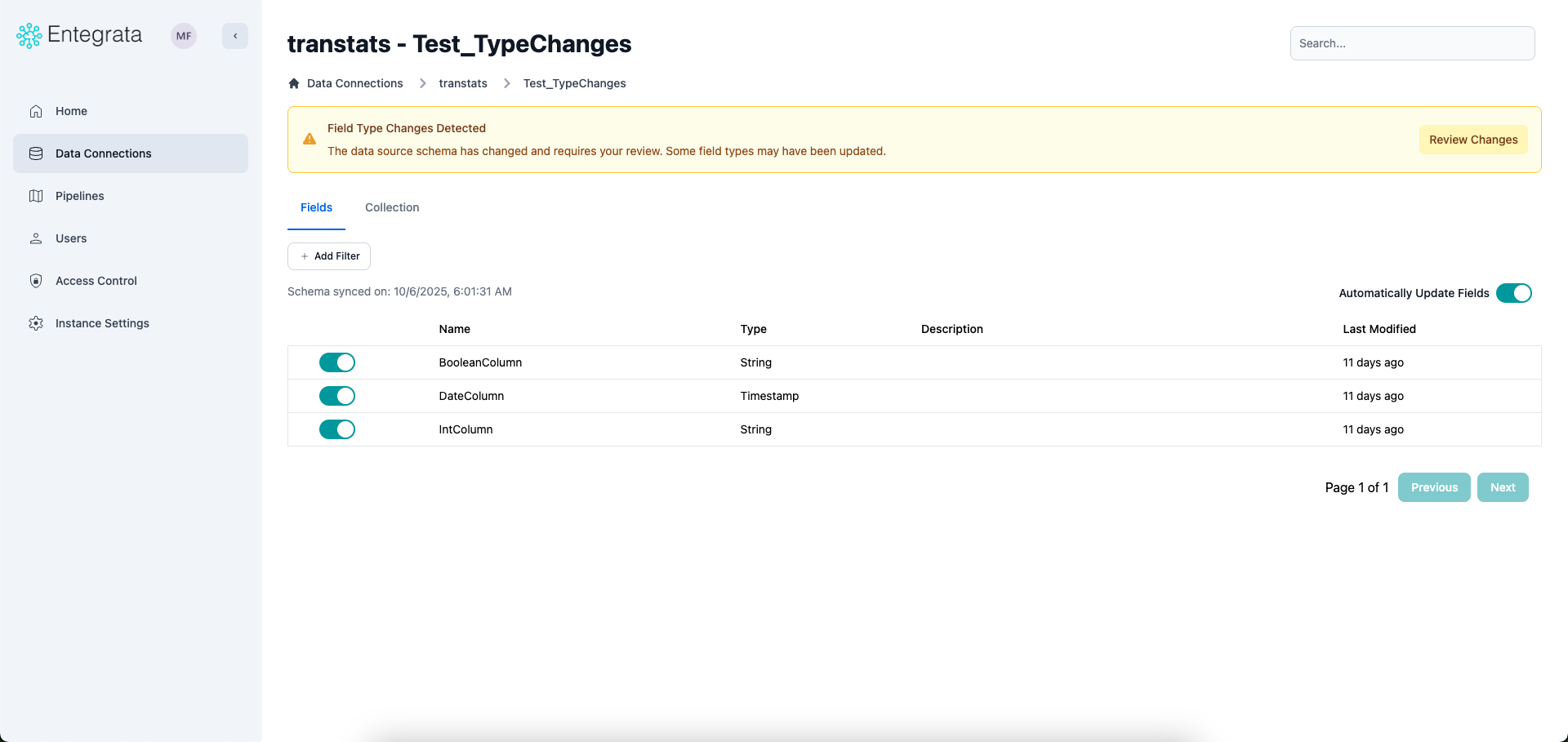
Responding to Breaking Changes
When discovery detects breaking changes:1
Review Change Details
Click the notification to see exactly what changed: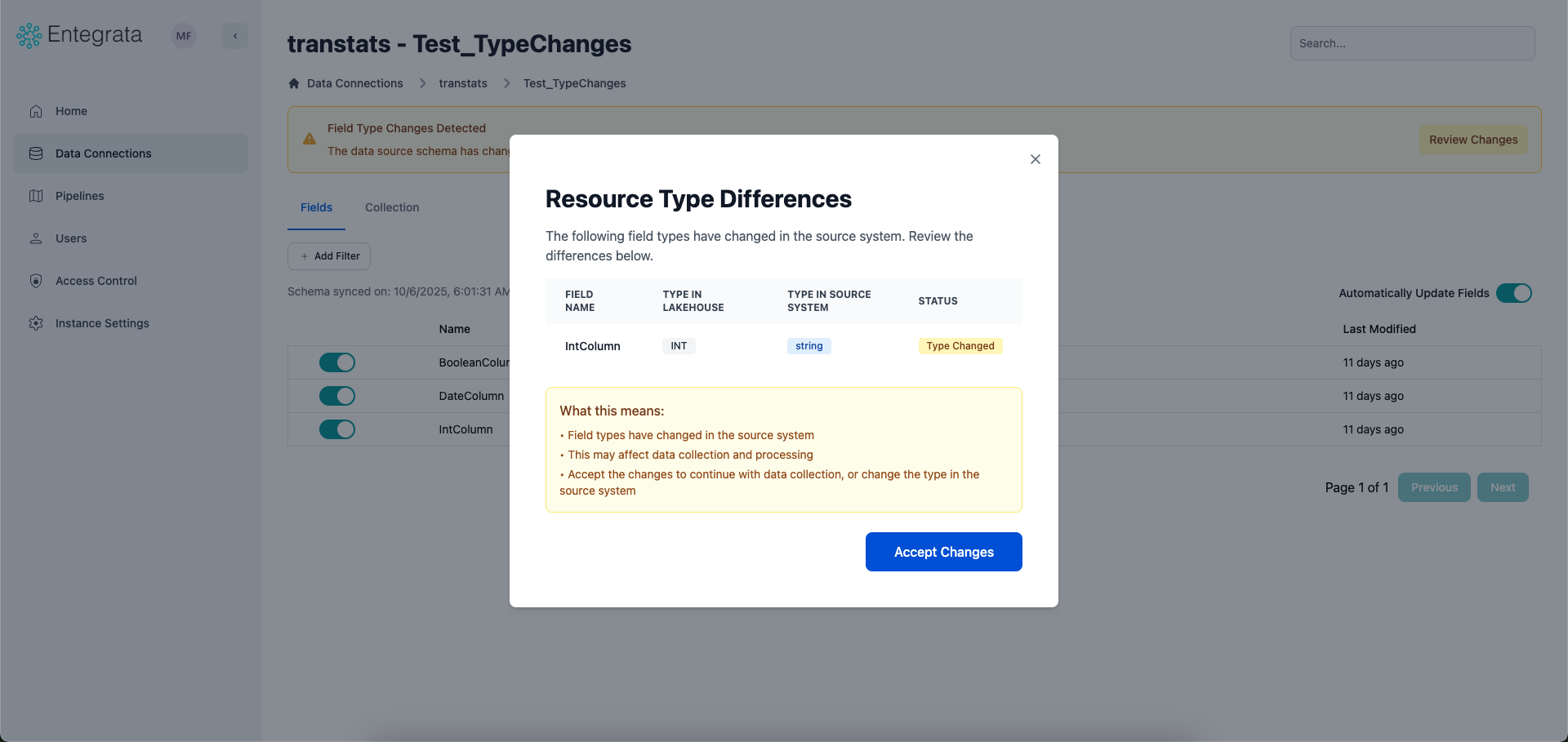
- Which fields were removed or modified
- Old vs. new data types
- Impact on existing collection configuration
2
Assess Impact
Determine how the change affects:
- Collection: Will filters or incremental fields still work?
- Unique keys: Are primary keys still valid?
- Downstream analytics: Will reports or dashboards break?
3
Update Configuration
Adjust resource settings to accommodate the change:
- Update filters if filtered fields changed
- Change incremental load field if it was removed
- Update unique keys if they changed
- Notify downstream consumers of schema changes
4
Test Collection
Trigger a manual collection to verify the updated configuration works
5
Monitor Results
Watch the first few scheduled collections to ensure stability
Overview
Understand how discovery works
Manual Discovery
Manually trigger discovery immediately when you need to